
Hong Kong Travel Guide for First-Timers: Entry, Districts and Crossing to the Mainland
Policy last verified: 2026-11-10
Key facts
- Hong Kong has its own immigration rules, separate from mainland China. Many Western passports get visa-free visits: 90 days for US, Canadian, Australian, French and German citizens and 180 days for British citizens, according to Hong Kong's Immigration Department.
- Stay on Hong Kong Island (Central, Sheung Wan, Wan Chai, Causeway Bay) or in Kowloon (Tsim Sha Tsui, Jordan, Mong Kok). Both sides are linked by the MTR and the Star Ferry.
- Tap a contactless Visa, Mastercard or UnionPay card at MTR gates, including the Airport Express, or get an Octopus card or the Octopus app for tourists.
- To reach the mainland, take the high-speed train from West Kowloon, the East Rail line to Lo Wu or Lok Ma Chau, a ferry, or a bus over the Hong Kong–Zhuhai–Macao Bridge. Only some of these accept 240-hour entry.
- Hong Kong counts as a separate region for 240-hour transit, but Hong Kong → mainland → Hong Kong does not qualify.
- Two to three days covers the harbour, the Peak, Kowloon and one of Lantau or the West Kowloon museums before you cross.
Short answer: Hong Kong is where many first-time visitors to southern China land. It has its own entry rules, separate from mainland China, and many Western passport holders can visit without a visa. Stay in Central or Sheung Wan on Hong Kong Island or Tsim Sha Tsui in Kowloon, tap a contactless bank card on the MTR or pick up an Octopus, and spend two or three days on the harbour, the Peak and Kowloon's streets. Then cross to Shenzhen, Guangzhou, Zhuhai or Macau by train, ferry or bus over the Hong Kong–Zhuhai–Macao Bridge.
For the next stop, see our Shenzhen city guide and Guangzhou city guide. For the border itself, see which Hong Kong crossings accept 240-hour entry and Hong Kong to Shenzhen by train.
Before you go: entry to Hong Kong
Hong Kong runs its own immigration controls. A visa for mainland China, or mainland visa-free entry, doesn't cover Hong Kong, and Hong Kong entry doesn't cover the mainland. You'll pass immigration again each time you cross.
The Immigration Department publishes the visa-free period for each nationality. On its list as of 10 November 2026: citizens of the US, Canada, Australia, France and Germany can visit for up to 90 days without a visa, and British citizens for up to 180 days. Other nationalities have different periods, and some need a visa. Check the department's list for your own passport before you book.
Hong Kong and the 240-hour transit rule
If you plan to visit mainland China on 240-hour visa-free transit, Hong Kong matters in two ways.
- Hong Kong is a separate region. For the 240-hour rule, Hong Kong, Macau and Taiwan count as separate from the mainland. You can arrive in Hong Kong, enter the mainland, then fly from Guangzhou or Shenzhen to a third country. You can also arrive on the mainland from abroad and leave for Hong Kong.
- A round trip doesn't qualify. Hong Kong → mainland → Hong Kong does not count as transit, because you'd be returning to the region you came from. For that kind of trip, you need 30-day visa-free entry (if your passport is on the list) or a visa. Routes such as A → mainland → Hong Kong → A are less clear-cut; call the national immigration hotline on 12367 (+86 12367 from abroad) before you book.
Only some crossings accept 240-hour entry: West Kowloon Station (high-speed rail), the Hong Kong–Zhuhai–Macao Bridge, and ferries to listed ports such as Shekou, Nansha, Pazhou and Zhongshan. Lo Wu, Lok Ma Chau, Huanggang and Shenzhen Bay are not entry ports for 240-hour transit, though you can leave the mainland through any open Guangdong port.
The 30-day visa-free list covers 50 countries, including the UK, Canada, Australia, New Zealand and most of the EU; for 48 of them it currently runs until 31 December 2026. The US is not on that list. We track the latest on our 30-day visa-free expiry page.
Read our 240-hour visa-free transit guide or check your route with the 240-hour checker. We explain public rules only; we don't offer visa services.
Arriving in Hong Kong
Most visitors fly into Hong Kong International Airport on Lantau Island. The Airport Express train runs into the city, and MTR gates, including the Airport Express, accept contactless bank cards, so you can tap through without buying a ticket. Buses and taxis also run from the airport. If you arrive from mainland China by train, you'll come into West Kowloon Station; by ferry from Macau, you'll arrive in Sheung Wan. If you land at the airport and continue to Shenzhen the same day, see Hong Kong Airport to Shenzhen.
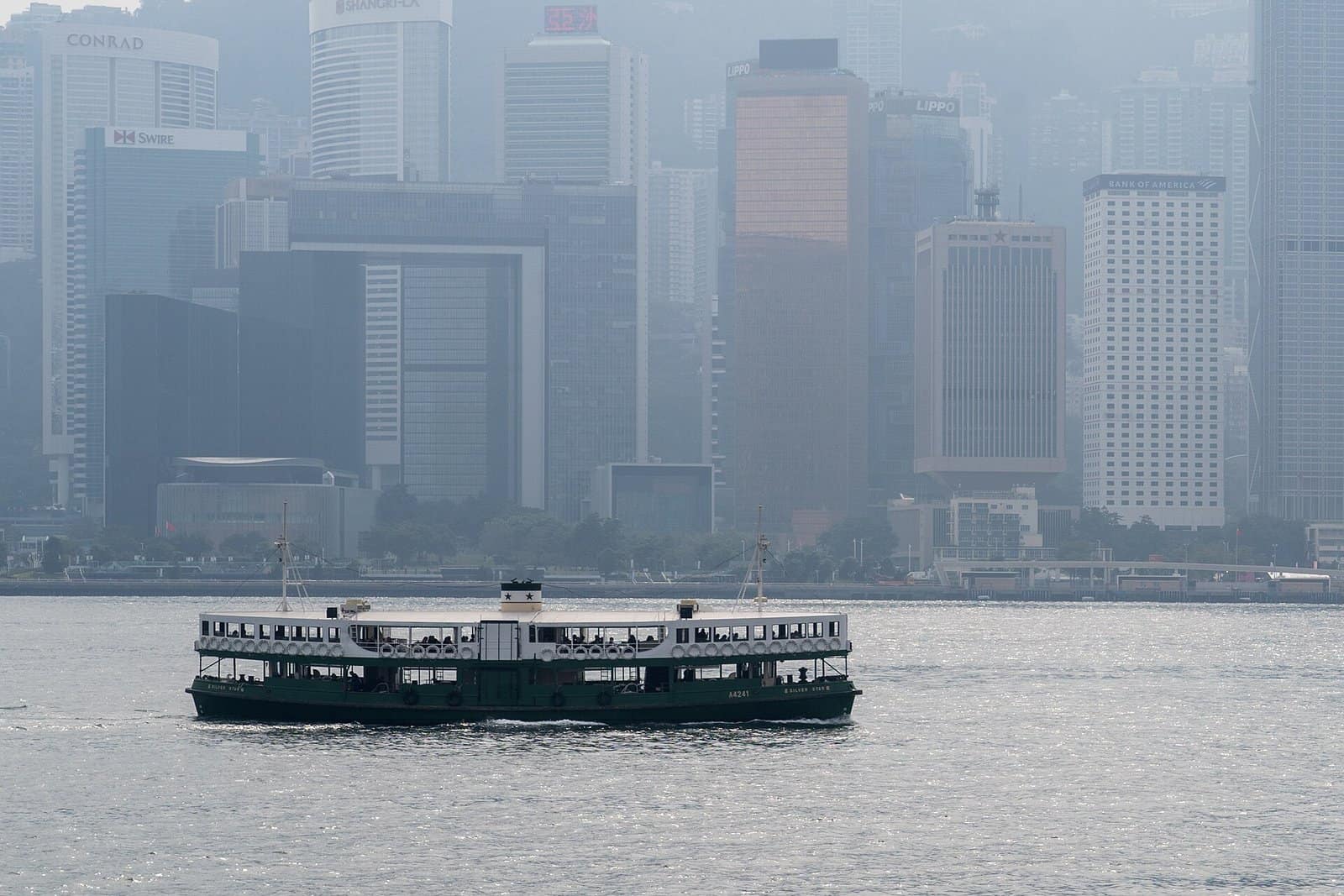 Photo: Alexkom000 / Wikimedia Commons, CC BY 4.0

Districts and where to stay
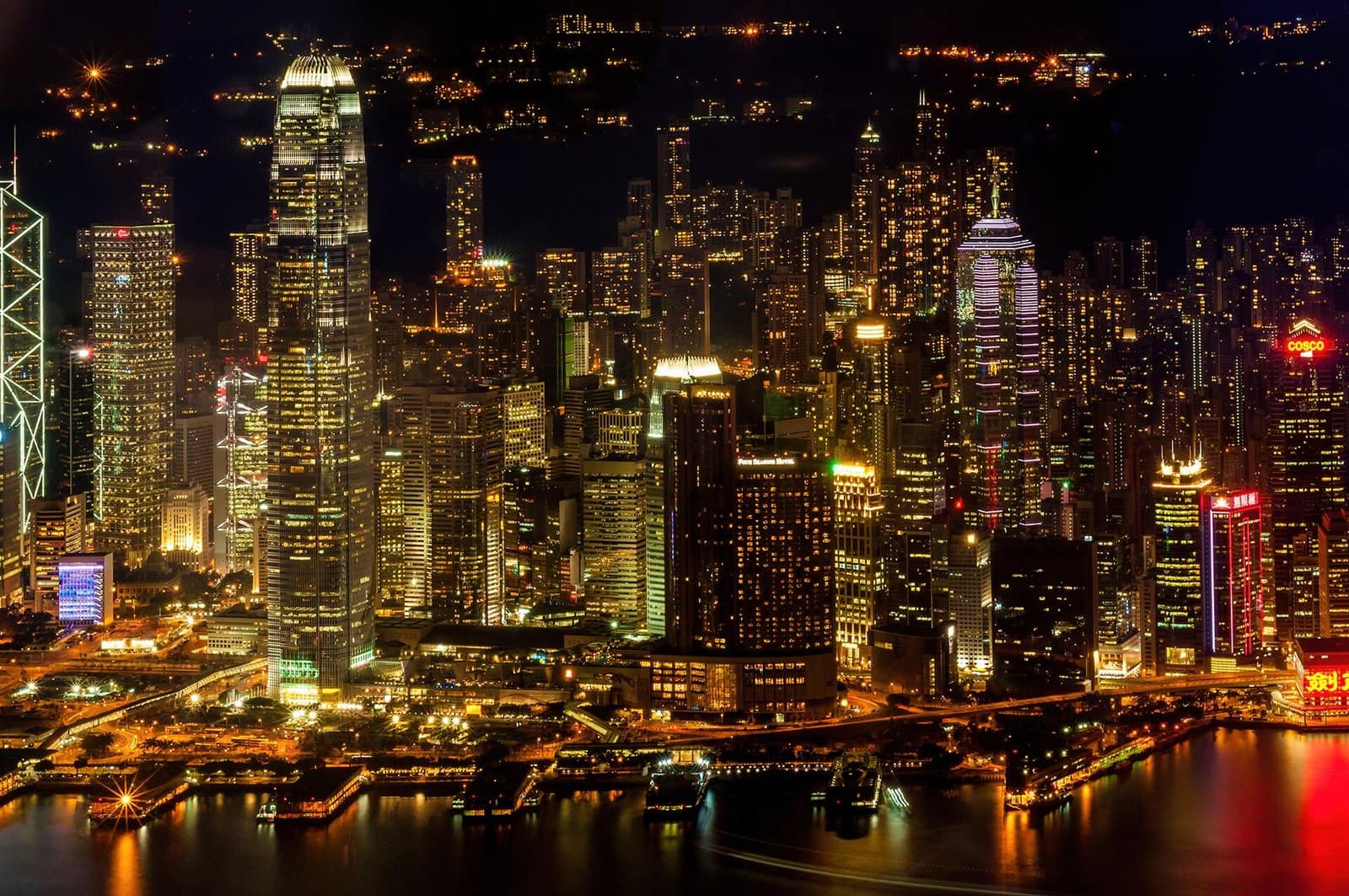
Hong Kong is compact for a first visit. Most of what you'll want to see is on the north side of Hong Kong Island and the southern tip of Kowloon, on either side of Victoria Harbour.
Hong Kong Island
- Central and Sheung Wan. The financial district, with the Peak Tram terminus on Garden Road, the Star Ferry pier, and older streets in Sheung Wan. It's also where the Hong Kong–Macao Ferry Terminal is (Shun Tak Centre). A good base if you're heading to Macau by sea.
- Wan Chai and Causeway Bay. Busy shopping and eating districts east of Central, with a Star Ferry route from Wan Chai to Tsim Sha Tsui and Golden Bauhinia Square on the harbour.
- The Peak. Hong Kong's best-known lookout, reached by the Peak Tram.
Kowloon
- Tsim Sha Tsui. The southern tip of Kowloon, facing Hong Kong Island. It has the harbourfront promenade, the Avenue of Stars and the Hong Kong Cultural Centre, the Star Ferry pier, and the China Ferry Terminal on Canton Road for ferries to the mainland. A convenient base for the high-speed rail.
- West Kowloon. Home to West Kowloon Station, the high-speed rail terminus for Shenzhen and Guangzhou, and the West Kowloon Cultural District with M+ and the Hong Kong Palace Museum.
- Jordan, Yau Ma Tei and Mong Kok. Dense, lively streets with street markets, small restaurants and neon. A wide choice of hotels, and a direct MTR ride to Tsim Sha Tsui and Central.
New Territories and Lantau
- The New Territories run north to the Shenzhen border. The MTR East Rail line ends at Lo Wu and Lok Ma Chau, the main walking crossings to Shenzhen.
- Lantau Island holds the airport, Tung Chung, the Ngong Ping 360 cable car to the Tian Tan Buddha, and the Hong Kong Port of the Hong Kong–Zhuhai–Macao Bridge.
Where to stay: for a first visit with onward travel, Tsim Sha Tsui or Jordan is convenient for West Kowloon Station and the China Ferry Terminal. Central or Sheung Wan suits you if you're heading to Macau by ferry or want the Peak and Hong Kong Island's streets on your doorstep.
First-visit sights
Victoria Harbour and the Star Ferry
Ride the Star Ferry between Central and Tsim Sha Tsui, or between Wan Chai and Tsim Sha Tsui. The Central route runs from early morning until late evening, roughly 06:30–23:30. You can pay with an Octopus, cash, or at ticket machines that accept credit cards, UnionPay, WeChat Pay, Alipay and AlipayHK. It's a short crossing and one of the best views of the skyline.
A Symphony of Lights
Every night at 20:00, buildings on both sides of the harbour join a free light and music show, A Symphony of Lights. The Tourism Commission recommends watching from the Tsim Sha Tsui waterfront by the Hong Kong Cultural Centre, the Avenue of Stars, or Golden Bauhinia Square in Wan Chai. The show is cancelled if a Typhoon Signal No. 3 or higher, or a Red or Black Rainstorm Warning, is in force from 15:00 that day.
The Peak and the Peak Tram
The Peak Tram has run since the 1880s and is one of the world's oldest funicular railways. It climbs from the Garden Road terminus in Central to the Peak, 396 metres above sea level, so steeply that the buildings outside seem to lean. Its own website lists the Central and Peak termini as open 07:30–23:00 every day. Queues can be long at weekends and around sunset, so go early or late.
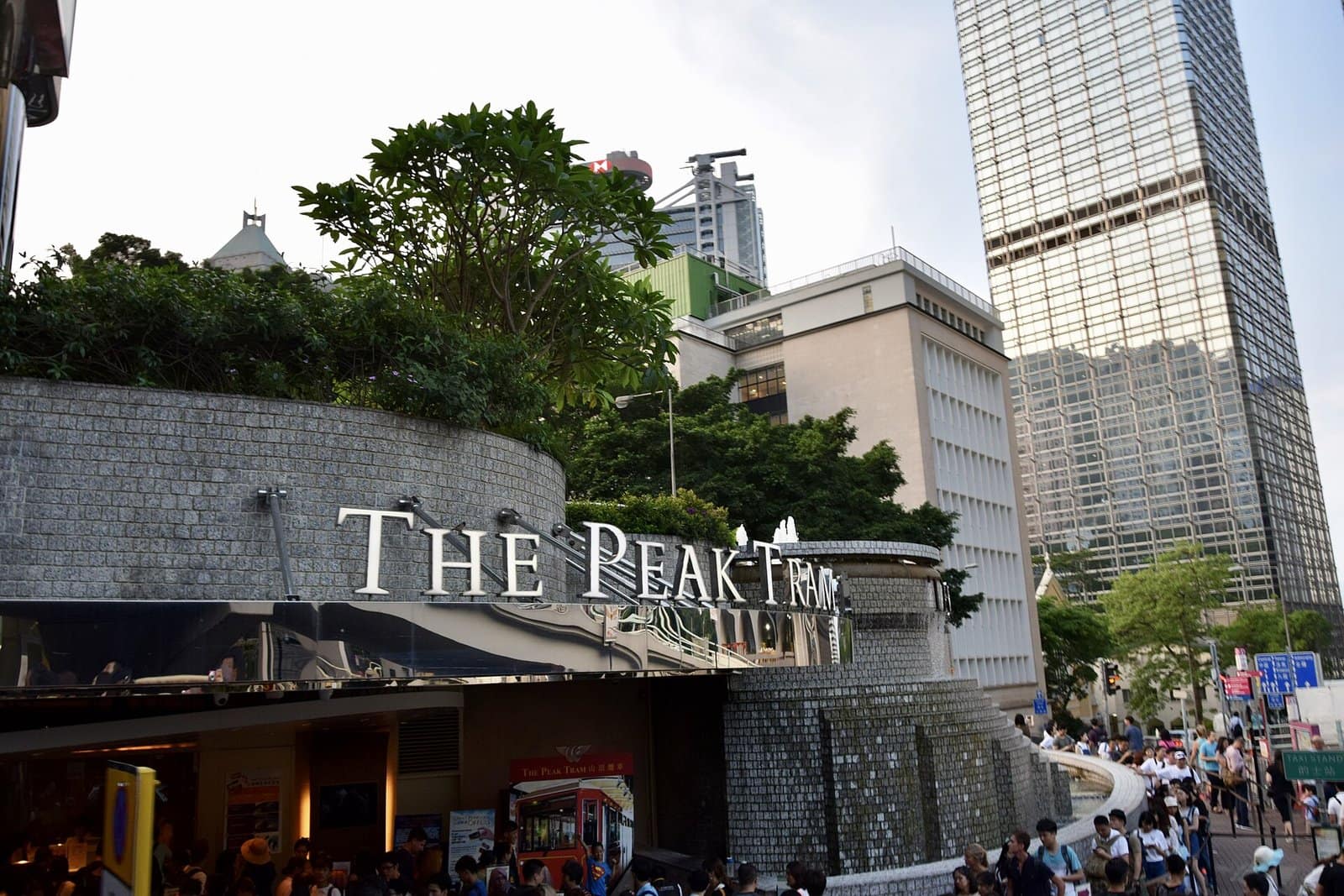 Photo: Ank Kumar / Wikimedia Commons, CC BY-SA 4.0

West Kowloon museums
- M+, the museum of visual culture at 38 Museum Drive, opens Tuesday to Sunday 10:00–18:00, until 22:00 on Fridays, and is closed on Mondays.
- The Hong Kong Palace Museum opens Monday, Wednesday, Thursday and Sunday 10:00–18:00, and Friday, Saturday and public holidays until 20:00. It's closed on Tuesdays (except public holidays), and the museum lists a full closure on 30 November 2026.
There's also a ferry from Central Pier 9 to the West Kowloon waterfront.
Lantau: Ngong Ping 360 and the Tian Tan Buddha
The Ngong Ping 360 cable car runs 5.7 km from Tung Chung up to Ngong Ping, a ride of about 25 minutes, with views over the airport and the hills. At the top are Po Lin Monastery and the 34-metre bronze Tian Tan Buddha, which you reach by climbing 268 steps. The cable car closes for scheduled maintenance from time to time; it was closed on 10 November 2026, so check its own website before you go. Lantau fits well on an arrival or departure day, since the airport and Tung Chung are close by.
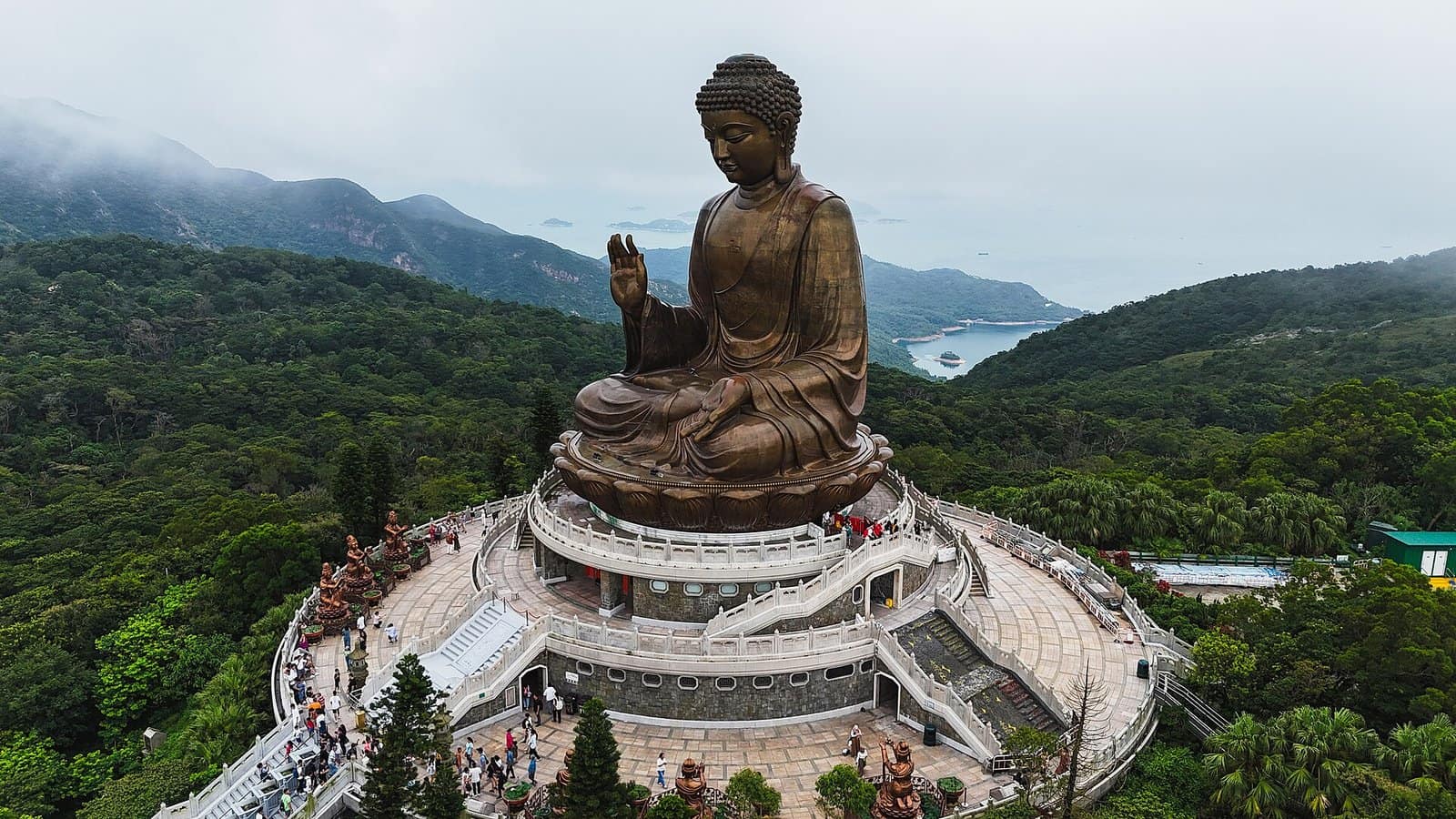 Photo: Huangdan2060 / Wikimedia Commons, CC BY 4.0

Paying in Hong Kong: cards and Octopus
Hong Kong uses the Hong Kong dollar. Paying is easier than on the mainland for most visitors: bank cards are widely accepted, and you don't need Alipay or WeChat Pay to get by.
MTR with a bank card. The MTR accepts contactless Visa and Mastercard cards and UnionPay credit cards (not UnionPay debit cards), and phones or watches carrying them, at its gates, including the Airport Express. Light Rail and MTR buses aren't covered. Tap the same card or device in and out, or you'll be charged incorrectly. You pay the same fare as an adult Octopus user, settled in Hong Kong dollars, so your bank may add a foreign transaction fee. One quirk: walking between Tsim Sha Tsui and East Tsim Sha Tsui stations counts as two journeys when you use a bank card.
Octopus. The Octopus is Hong Kong's stored-value card. It works on almost all public transport, including buses, minibuses, trams and ferries, and in convenience stores, supermarkets and many restaurants. Visitors have three main options, according to Octopus:
- Octopus App for Tourists, for iPhone and Apple Watch. You top it up from the app and can get a refund of the remaining value in the app before you leave. It carries a refundable deposit.
- Tourist Octopus, a physical card sold as a souvenir. It has no deposit, and you can get the remaining value refunded.
- On-Loan Octopus, the standard card with a refundable deposit.
There's also a Tourist Octopus–China T-Union version that works in Hong Kong, Macau and hundreds of mainland cities. Check Octopus's own website for current terms.
Mobile data. Hong Kong is outside mainland China's internet controls, so your usual apps work here. Plan your data for the mainland leg separately; our paying and staying connected guide explains the options.
Crossing to the mainland and Macau
Hong Kong is the gateway to the rest of the region. Choose your crossing based on where you're going and which entry basis you're using.
| Where to | How | 240-hour entry? |
|---|---|---|
| Shenzhen (Futian, Shenzhen North) and Guangzhou (Guangzhou South, Guangzhou East) | High-speed train from West Kowloon; both immigration checks are inside the station | Yes |
| Shenzhen (Luohu, Futian) | MTR East Rail line to Lo Wu or Lok Ma Chau, then walk across | No (entry); yes for exit |
| Shekou (Shenzhen), Nansha and Pazhou (Guangzhou), Zhongshan | Ferry from the China Ferry Terminal in Tsim Sha Tsui (and Sheung Wan for Shekou) | Yes |
| Zhuhai | Shuttle bus over the Hong Kong–Zhuhai–Macao Bridge, or ferry to Jiuzhou Port | Bridge: yes |
| Macau | Ferry from the Hong Kong–Macao Ferry Terminal in Sheung Wan, or shuttle bus over the bridge | Not applicable (Macau has its own entry rules) |
High-speed rail from West Kowloon. This is the simplest crossing for most visitors. Buy tickets on 12306 or at the station, then go through the real-name check, security, Hong Kong departure and mainland arrival before boarding, all inside the station. Trains reach Futian, in central Shenzhen, in about 15 minutes and Guangzhou South in under an hour on the fastest services. See our Hong Kong to Shenzhen train guide.
The Hong Kong–Zhuhai–Macao Bridge. Shuttle buses leave the Hong Kong Port, next to the airport, for the Zhuhai and Macau ports 24 hours a day, every 5 minutes or so at peak times and every 15 to 30 minutes overnight. Tickets are sold in the departure hall and online. To reach the Hong Kong Port, take bus B4 from the airport area, B5 from Sunny Bay, B6 from Tung Chung, or the A11 and other airport routes from the city. Cross-boundary coaches also run directly from the city. Our Hong Kong–Zhuhai–Macao Bridge guide covers tickets, hours and how the Zhuhai and Macau ports differ.
Macau. Macau has its own immigration rules, separate from both Hong Kong and the mainland. According to the Macau government, US citizens can visit without a visa for 30 days, EU and Schengen citizens for 90 days and British citizens for six months; your passport must be valid for 90 days beyond your stay, and you may be asked for an onward or return ticket. See our Macau city guide for how to get there, where to stay and what to see.
How long to stay and how to plan your days
Two days.
- Day 1, the harbour and the Peak: Central and Sheung Wan, the Peak Tram up in the afternoon, the Star Ferry to Tsim Sha Tsui, then A Symphony of Lights at 20:00 and dinner in Jordan or Mong Kok.
- Day 2, Kowloon and West Kowloon: M+ or the Hong Kong Palace Museum (check closing days), the West Kowloon waterfront, then the streets and markets of Yau Ma Tei and Mong Kok.
Three days. Add Lantau: the Ngong Ping 360 cable car, Po Lin Monastery and the Tian Tan Buddha, ideally on the day you fly or the day you head over the bridge to Zhuhai or Macau.
Then cross. For ready-made routes, see Hong Kong and Shenzhen in 3 days, Hong Kong, Shenzhen and Guangzhou in 5 days and Hong Kong, Macau and Zhuhai in 3 days.
FAQ
Do I need a visa for Hong Kong? Many Western passport holders don't: 90 days for US, Canadian, Australian, French and German citizens and 180 days for British citizens. Check the Immigration Department's list for yours.
Does my China visa or visa-free entry cover Hong Kong? No. Hong Kong and the mainland have separate immigration controls.
Can I do Hong Kong → Shenzhen → Hong Kong on 240-hour transit? No. That's a round trip to the same region. Use 30-day visa-free entry or a visa, or plan an onward trip to a third country.
Do I need an Octopus? Not for the MTR, but it's handy for buses, minibuses, trams, ferries and small shops.
What's the easiest way to Shenzhen or Guangzhou? The high-speed train from West Kowloon. It's also a 240-hour entry port.
How do I get to Macau? By ferry from Sheung Wan, or by shuttle bus over the Hong Kong–Zhuhai–Macao Bridge, which runs 24 hours.
More guides for your trip
- Shenzhen city guide
- Guangzhou city guide
- Hong Kong Airport to Shenzhen
- Hong Kong to Shenzhen by train
- Hong Kong–Zhuhai–Macao Bridge
- Hong Kong border crossings and 240-hour entry
- 240-hour visa-free transit guide
- 30-day visa-free expiry page
- Shenzhen tech day trip from Hong Kong
Last verified: 10 November 2026. Entry rules, opening hours and transport change, so check the sources listed on this page before you go.
FAQ
Do I need a visa for Hong Kong?
Many nationalities don't. Hong Kong's Immigration Department lists visa-free visits of 90 days for citizens of the US, Canada, Australia, France and Germany, and 180 days for British citizens, among others. Check the department's list for your passport, as rules differ by nationality.
Does a China visa or China's visa-free entry cover Hong Kong?
No. Hong Kong has its own immigration controls. You enter Hong Kong under Hong Kong's rules, then need a separate basis (30-day visa-free entry, 240-hour transit or a visa) to enter mainland China.
Can I use 240-hour transit for a trip from Hong Kong to Shenzhen and back to Hong Kong?
No. Hong Kong counts as a separate region, but you must leave the mainland for a different country or region from the one you arrived from. Hong Kong → Shenzhen → Hong Kong does not qualify. Hong Kong → Guangzhou → onward flight to a third country can, if you enter at a listed port. Check your route with our 240-hour checker and call 12367 if unsure.
Do I need an Octopus card?
Not for the MTR, which accepts contactless Visa, Mastercard and UnionPay cards at its gates. An Octopus is still handy for buses, minibuses, ferries, trams, convenience stores and anywhere else that doesn't take cards. Visitors can buy a Tourist Octopus or use the Octopus App for Tourists on iPhone and Apple Watch.
Which border crossing should I use to go to Shenzhen?
For 240-hour entry, take the high-speed train from West Kowloon or a ferry to a listed port. With 30-day visa-free entry or a visa, you can also take the East Rail line to Lo Wu or Lok Ma Chau and walk across. Our border-crossing guide compares them.
How do I get from Hong Kong to Macau?
By ferry from the Hong Kong–Macao Ferry Terminal in Sheung Wan, or by shuttle bus over the Hong Kong–Zhuhai–Macao Bridge from the Hong Kong Port near the airport. The bridge shuttle buses run 24 hours. Macau has its own entry rules, separate from both Hong Kong and the mainland.
Sources
- Hong Kong Immigration Department – visit visa and entry permit requirements
- Hong Kong Immigration Department – open data: visit visa requirements by nationality (CSV)
- National Immigration Administration – Announcement No. 4 [2025], 240-hour entry ports incl. West Kowloon and the Hong Kong–Zhuhai–Macao Bridge
- National Immigration Administration – 240-hour visa-free transit policy interpretation
- National Immigration Administration – 12367 service hotline for overseas callers
- MTR High Speed Rail – 240-hour visa-free transit at West Kowloon
- MTR High Speed Rail – departure process at West Kowloon
- MTR – travelling to and from Lo Wu and Lok Ma Chau
- MTR – paying fares with contactless bank cards
- Octopus – card and app choices for tourists
- Star Ferry – routes, hours and payment
- The Peak – Peak Tram opening hours
- Tourism Commission – A Symphony of Lights: time, viewing points, weather suspension
- Hong Kong Tourism Board – Ngong Ping 360
- M+ – plan your visit (hours, address)
- Hong Kong Palace Museum – plan your visit (hours, closures)
- Hong Kong–Zhuhai–Macao Bridge Hong Kong Port – cross-boundary transport
- Hong Kong–Zhuhai–Macao Bridge Hong Kong Port – local public transport (bus routes to the port)
- GovHK – ferry services to Macao and Chinese Mainland ports
- Macao SAR Government – entry requirements for visitors
- Ministry of Foreign Affairs – unilateral visa-free policy FAQ (48 countries until 31 Dec 2026)