
Guangzhou Travel Guide for First-Timers: Food, the Old City and the Pearl River
Policy last verified: 2026-11-10
Key facts
- Guangzhou is the capital of Guangdong and the home of Cantonese food. High-speed trains from Hong Kong West Kowloon reach Guangzhou South in under an hour on the fastest services, and trains from Shenzhen run all day.
- Stay in Tianhe (Zhujiang New Town, the modern centre), Yuexiu (the old city axis and Beijing Road) or Liwan (Xiguan, Shamian Island and the Chen Clan Ancestral Hall).
- Since 12 October 2025, every Guangzhou Metro station has gates that accept contactless Visa, Mastercard, American Express and JCB cards issued abroad, as well as UnionPay.
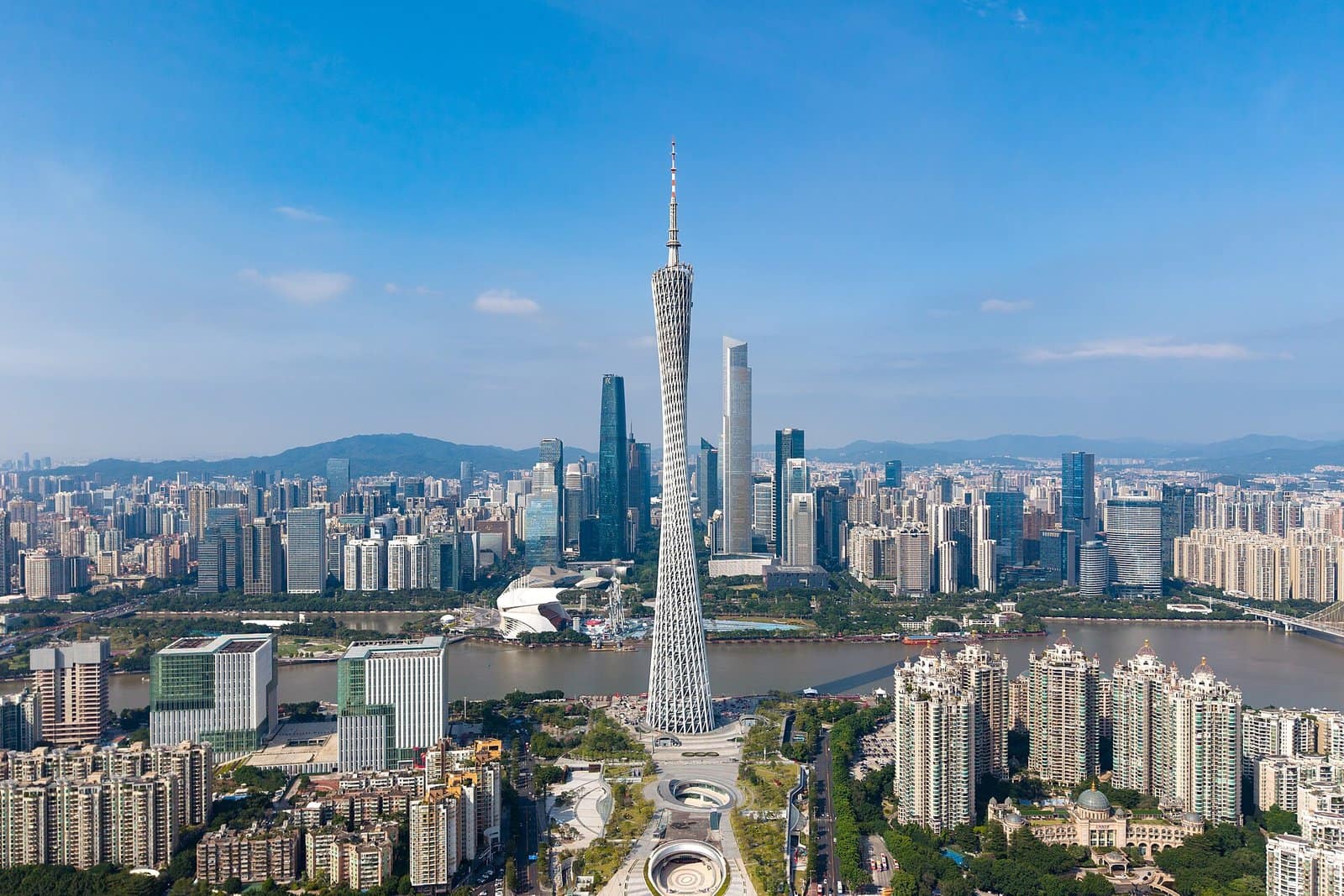
- Canton Tower and a Pearl River night cruise are a classic pick for first-time visitors. The old Xiguan streets, Yongqing Fang and morning tea are where the city's food culture is easiest to see.
- You need your own basis to enter mainland China: 30-day visa-free entry, 240-hour visa-free transit or a visa. Guangzhou has three 240-hour entry ports of its own, and West Kowloon in Hong Kong is another.
- Two days covers the old city, the river and the skyline. Three days lets you slow down for more meals and a day of museums or parks.
Short answer: Guangzhou is the capital of Guangdong province and the city most closely tied to Cantonese food. It's an easy trip on your own from Hong Kong or Shenzhen. Stay in Tianhe, Yuexiu or Liwan, ride the metro with a contactless bank card, and set up Alipay or WeChat Pay before you fly. Spend your mornings over morning tea, your days in the old city around Yuexiu Park, Xiguan and Shamian Island, and your evenings by the Pearl River under Canton Tower.
This page is the starting point for our Guangzhou coverage. The Food section below covers morning tea and what to order. For the rest of the region, see our Shenzhen, Hong Kong, Macau and Zhuhai city guides.
Before you go: entry
You need your own valid basis to enter mainland China: 30-day visa-free entry, 240-hour visa-free transit, or a visa. Guangzhou is in Guangdong, which is covered by the 240-hour policy, but your route has to qualify: you must arrive from one country or region and leave for a different one, with a confirmed onward ticket. Hong Kong and Macau count as separate regions, but a Hong Kong → Guangzhou → Hong Kong round trip does not qualify.
Guangzhou has three 240-hour entry ports of its own: Baiyun International Airport, Nansha Port and the Pazhou ferry terminal. The rail checkpoint inside Hong Kong West Kowloon Station has also been an entry port since 5 November 2025. The land crossings at Lo Wu (Luohu) and Lok Ma Chau (Futian) are not.
The 30-day visa-free list covers 50 countries, including the UK, Canada, Australia, New Zealand and most of the EU. For 48 of them it currently runs until 31 December 2026, and no 2027 extension had been announced when we checked on 10 November 2026. The US is not on that list, so US passport holders usually rely on 240-hour transit or a visa.
Read our 240-hour visa-free transit guide, check which Hong Kong crossings work in our border-crossing guide, or run your route through the 240-hour checker. If anything is unclear, call the national immigration hotline on 12367 (+86 12367 from abroad). We explain public rules only; we don't offer visa services.
Getting to Guangzhou
From Hong Kong by high-speed rail. Trains leave Hong Kong West Kowloon Station for Guangzhou South, in Panyu district, and some run to Guangzhou East in Tianhe. The fastest trains reach Guangzhou South in under an hour; on the MTR's long-haul schedule, for example, the 08:05 departure calls at Guangzhou South at 08:56. You clear Hong Kong departure and mainland arrival inside West Kowloon, so allow time for the real-name check, security and both immigration desks before boarding. Tickets are sold on the 12306 app and website and at West Kowloon's counters and machines. If you're entering on 240-hour transit, tell the mainland officer and show your onward ticket.
From Hong Kong on foot, then by train. The MTR East Rail line runs to Lo Wu and Lok Ma Chau. From the Shenzhen side, trains run from Shenzhen station (next to Luohu) to Guangzhou East, and high-speed trains run from Futian to Guangzhou South. This route works with 30-day visa-free entry or a visa, but not for 240-hour entry. Our Hong Kong to Shenzhen train guide explains the crossing itself.
From Hong Kong by ferry. Ferries from the China Ferry Terminal in Tsim Sha Tsui sail to Nansha, in the far south of Guangzhou, and to Pazhou, near the city centre. Both ports accept 240-hour entry. Sailings are less frequent than trains, so check the operator's timetable for your date before you plan around a ferry.
From Shenzhen. High-speed trains run from Shenzhen North and Futian to Guangzhou South, and other trains run from Shenzhen station to Guangzhou East. Journey times depend on the train, so check 12306 for your date. Our Shenzhen city guide covers the Shenzhen stations.
By air. Guangzhou Baiyun International Airport is north of the city. Check which terminal your flight uses. All flights that used Terminal 1 moved to the new Terminal 3 on 7 May 2026. For Terminal 3, the airport says to take Metro Line 3 or Line 9 to Gaozeng station and transfer at Exit B to a shuttle bus, a ride of about 15 minutes. From Terminal 3 to the city, shuttle buses to Gaozeng leave from Stop 74 at the transport centre.
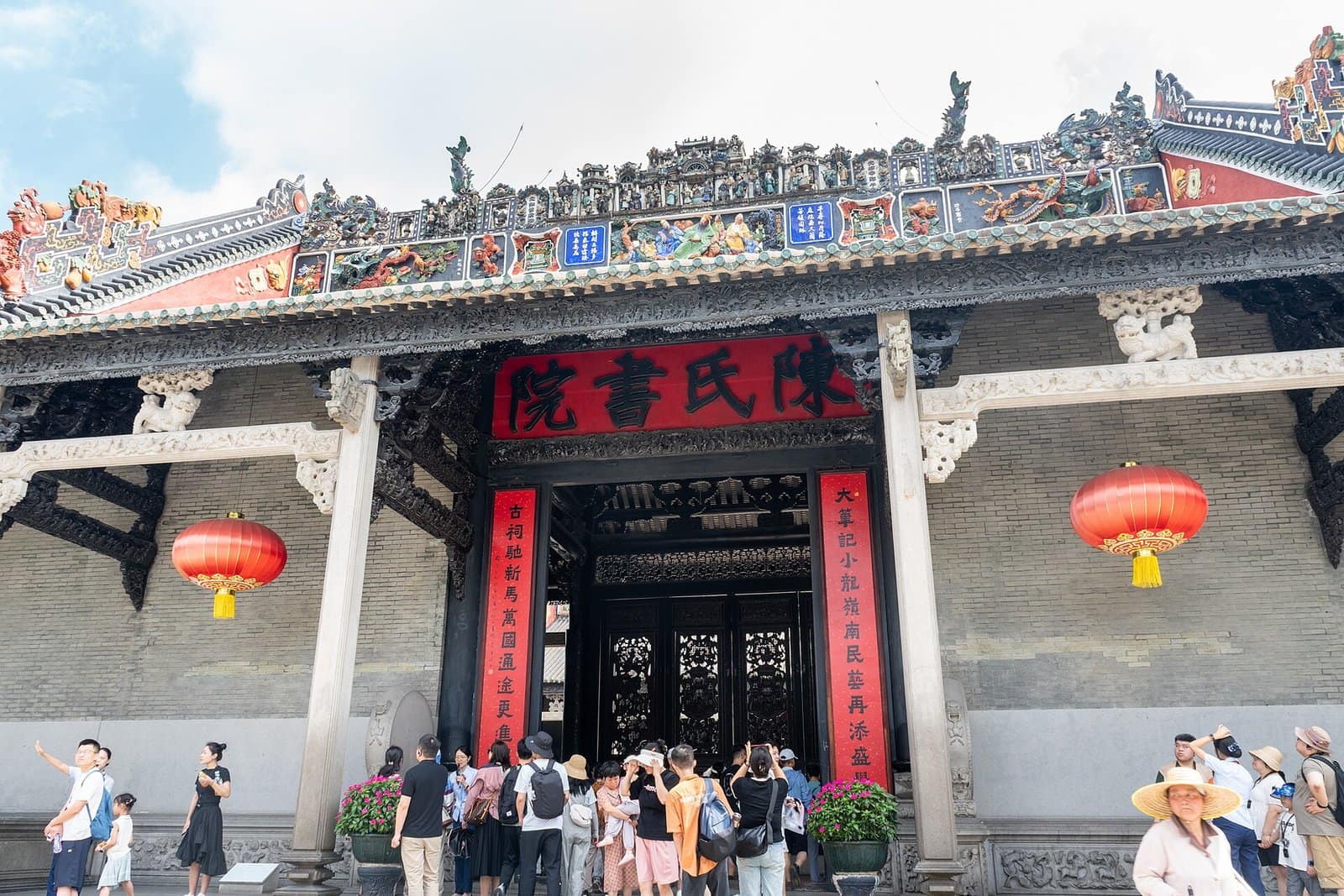 Photo: Shujianyang / Wikimedia Commons, CC BY-SA 4.0

The districts at a glance
Guangzhou is very large, but a first visit mostly stays in four central districts on either side of the Pearl River.
Yuexiu: the old city axis
Yuexiu is the historic core. The city's tourism portal describes a north–south axis that has carried Guangzhou's political and cultural life for some 2,000 years, and every stop on it is within walking distance of a metro station.
- Yuexiu Park (960 North Jiefang Road). Free, and listed as open 06:00–22:00. It covers seven hills and three lakes, and holds the Zhenhai Tower, a 25-metre Ming-dynasty tower, the Five Rams Sculpture from 1956, sections of the old city wall and the Sun Yat-sen Monument. Take Line 2 to Yuexiu Park; for the Zhenhai Tower, Xiaobei station on Line 5 is also close.
- Sun Yat-sen Memorial Hall. An octagonal hall with a blue-glazed roof, completed in 1931. Take Line 2 to Sun Yat-sen Memorial Hall.
- Beijing Lu Pedestrian Street and Guangzhou Zero Point. The busy shopping street at the southern end of the axis, next to People's Park and the municipal government building. Take Line 1 or 2 to Gongyuanqian.
Liwan: Xiguan, Shamian and the clan hall
Liwan, west of Yuexiu, is the old Xiguan merchant quarter. It's the best area to walk, eat and see Lingnan (southern Chinese) architecture.
- Chen Clan Ancestral Hall (34 Enlongli, Zhongshan 7th Road), also called the Chen Clan Academy. Completed in 1893 as an ancestral temple and school for the Chen family, it's a national heritage site known for its wood, stone and brick carving, plaster sculpture and cast iron. It now houses the Guangdong Folk Art Museum, with more than 20,000 traditional craft pieces. The district government lists it as open Monday and Wednesday to Sunday, 09:00–17:30, closed on Tuesdays. Take Line 1 or 8 to Chen Clan Academy, Exit D. Check tickets and opening days on its own website before you go, and carry your passport.
- Yongqing Fang (99 Enning Road). A restored Qing-era block in Xiguan with craft workshops (Cantonese embroidery, enamelware, lion dance), the former residence of Bruce Lee's family, now a small museum, and the Cantonese Opera Art Museum. The district government says both Yongqing Fang and the Chen Clan Ancestral Hall have bilingual signs and accept Visa and Mastercard. In the evening the lanes are lit and there are opera performances. Take Line 1 or 6 to Huangsha, Exit B, then walk about 10 minutes.
- Shamian Island. A small island of 0.3 square kilometres on the Pearl River, with 137 old and notable trees and 56 buildings or sites listed as national cultural relics. In the 20th century more than 10 countries had consulates here, along with foreign banks and companies. It's flat, leafy and good for a slow walk past old European-style buildings, the white Our Lady of Lourdes Chapel and cafés. It's a short walk from Huangsha station.
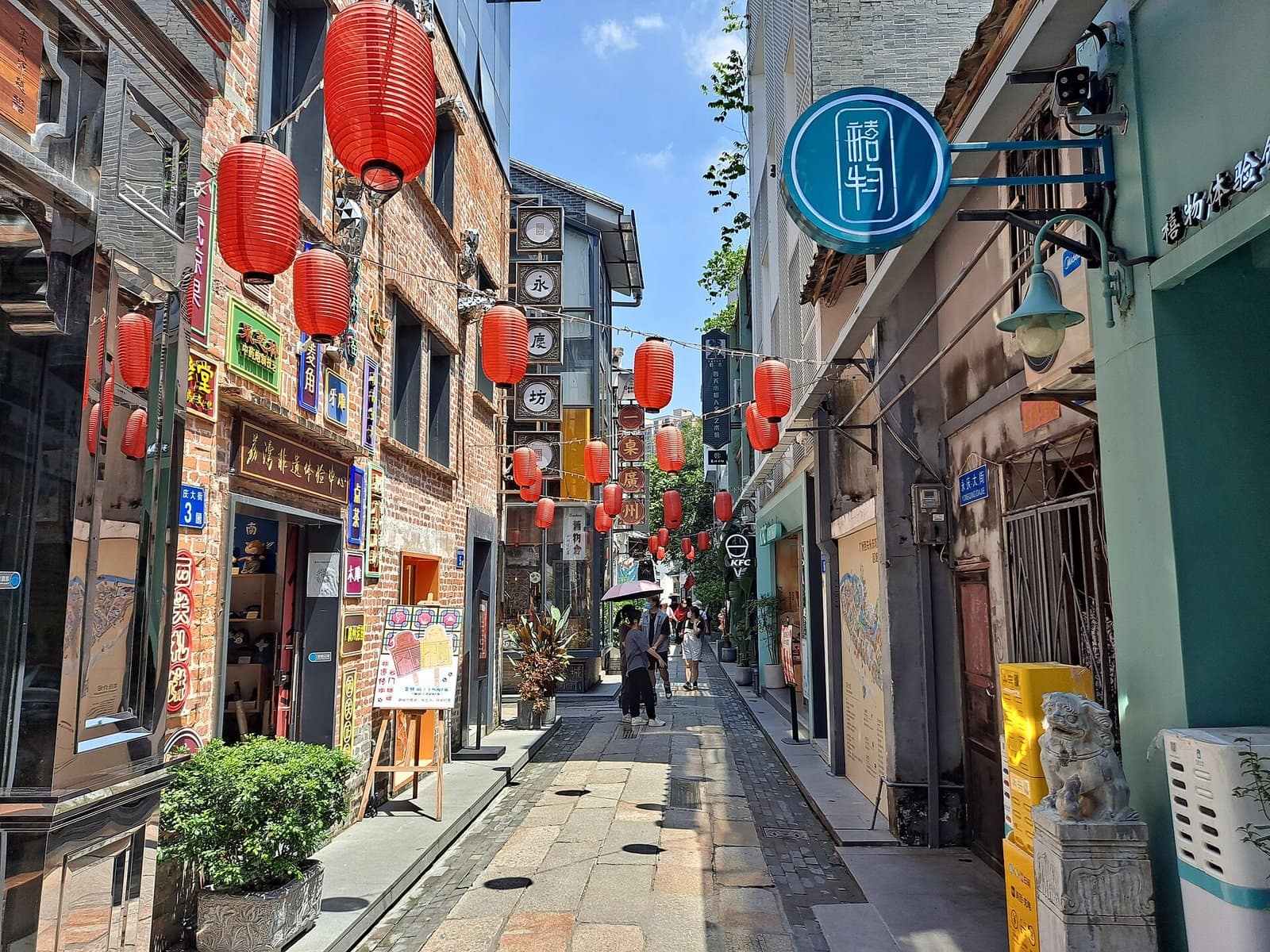 Photo: 钉钉 / Wikimedia Commons, CC BY-SA 4.0

Tianhe: the modern centre
Tianhe is the business district. Zhujiang New Town is the cluster of towers on the north bank, and Huacheng Square (Flower City Square) is the long plaza at its centre that looks south across the river to Canton Tower. Guangzhou East station is in the north of the district. Tianhe is a convenient base if you want the skyline and the river on your doorstep and plan to day-trip to the old city by metro.
Haizhu: Canton Tower and the south bank
Haizhu sits across the river from Tianhe and is where you'll find Canton Tower (222 Yuejiang West Road) and the riverside piers for evening cruises.
Landmarks: a short list for a first visit
If you only have time for a few, these show the city's different sides:
- Morning tea in a Cantonese tea house (see Food below).
- Yuexiu Park and the Zhenhai Tower for the old city.
- Chen Clan Ancestral Hall for Lingnan carving and crafts (closed Tuesdays).
- Yongqing Fang and the Xiguan lanes for food and heritage shops.
- Shamian Island for a slow afternoon walk.
- Huacheng Square for the skyline at dusk.
- Canton Tower and the Pearl River after dark.
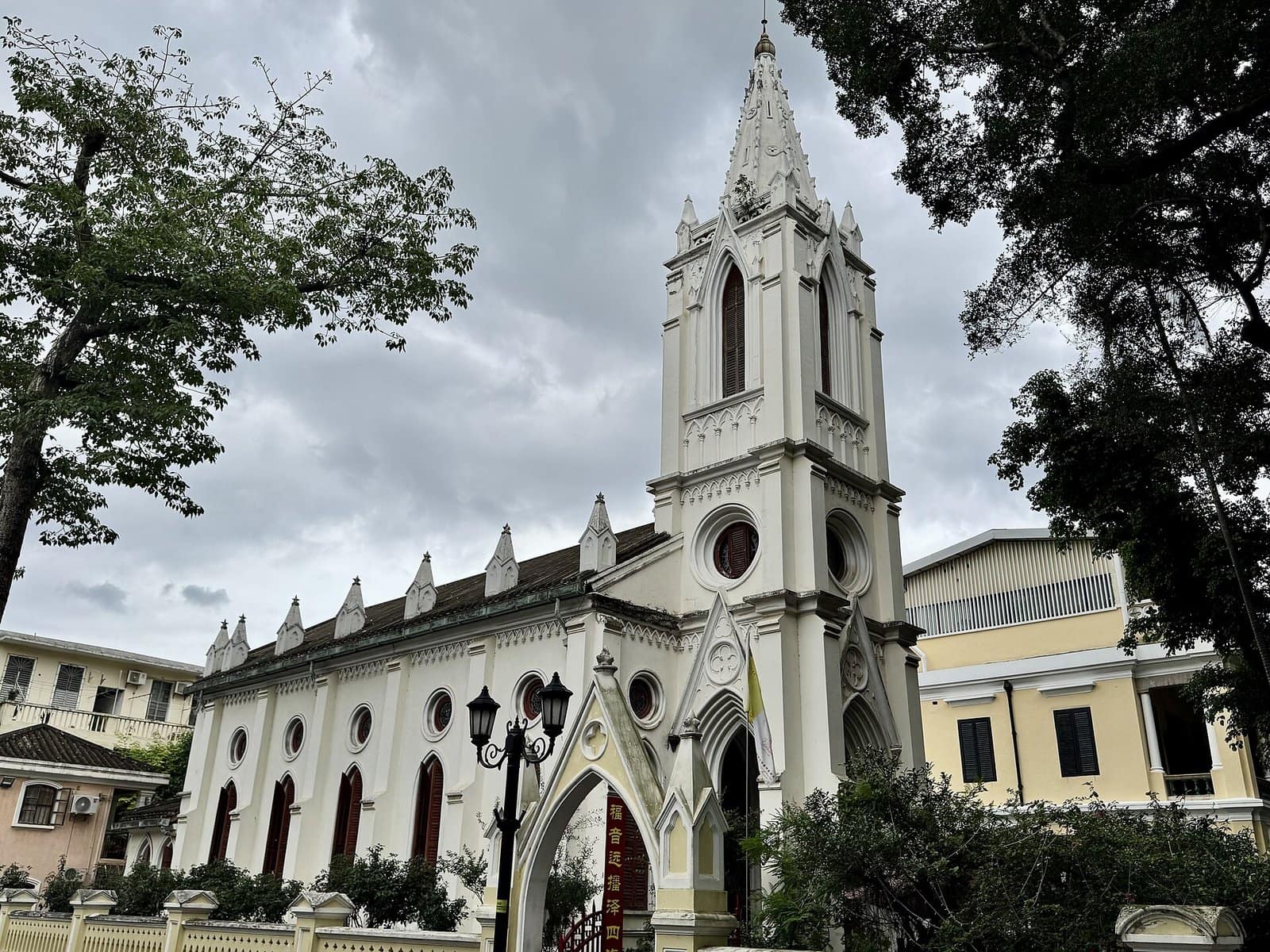 Photo: JULIANISME / Wikimedia Commons, CC BY-SA 4.0

Canton Tower and the Pearl River at night
Canton Tower is a classic pick for first-time visitors. Its indoor observation decks at 428 m and 433.2 m include a glass walk, with views over the river and the city. Higher up there's an outdoor 488 m lookout, a ride called the Bubble Tram and a vertical drop ride called the Sky Drop. Check which levels and rides your ticket includes. The tower's own website lists visitor hours of 09:30–22:30. Take Metro Line 3 or the APM line to Canton Tower station. Outdoor platforms and rides can pause in bad weather, so check what's running on the day and buy tickets for the exact level you want.
A Pearl River night cruise is also a classic pick for first-time visitors. Boats leave from several piers, including Tianzi, Dashatou, Haixinsha, Xidi and the Canton Tower Fortune Pier, just east of the tower. For the Fortune Pier, take Metro Line 3 or the APM line to Canton Tower station, or the tram to Canton Tower East. Routes and departure times differ by pier, so make sure your ticket is for the pier you're going to, and arrive early. Bring your passport, as tickets may be issued in your name; check before you go.
If you'd rather not pay for the view, the riverside promenades in Tianhe and Haizhu and Huacheng Square itself are free and look straight at the lit-up tower.
Food
Guangzhou is known across China for Cantonese cooking. The city's tourism portal lists these as the dishes to look for, and all of them are easy to find in ordinary restaurants and tea houses:
- Morning tea (dim sum). Tea houses serve shrimp dumplings, siu mai, egg tarts and char siu bao (roast pork buns), plus congee and crispy rice rolls filled with shrimp.
- Wonton noodles. Thin, springy noodles made with duck egg, traditionally pressed with bamboo, served with wontons in a bone-and-fish broth. A common breakfast.
- Cantonese soups. Slow-cooked broths of meat, fish and herbs served with most meals.
- Juejuebao. A sizzling claypot of chicken, seafood or vegetables that keeps cooking at the table.
- Roast meats. Char siu (barbecued pork) and roast goose, often bought from shops with queues outside.
- Beef chow fun. Stir-fried flat rice noodles with beef, a test of a chef's skill with the wok.
- Congee and sweet soups. Late-night rice porridge, and dessert soups that change with the seasons.
Liwan, around Xiguan and Yongqing Fang, is the easiest area to eat your way through on foot. Small shops often take only Alipay or WeChat Pay, so set those up before you go.
Tech you can actually try
Tech isn't the main reason to visit Guangzhou, which is Shenzhen's role (see our Future City column). There are a few things a visitor can see:
- Self-driving vehicles. Guangzhou's tourism portal lists autonomous shuttle buses and robotaxi services in designated zones in districts such as Huangpu, Nansha and around Pazhou and Canton Tower. They're booked through Chinese-language apps or mini-programs, and zones, hours and sign-up rules change, so check in the app before you plan around one. Some apps may not accept foreign phone numbers or IDs.
- Tap-to-ride metro gates that take foreign bank cards, which make the city easier to get around than it was a few years ago.
Getting around
The metro is the easiest way to get around. Line 1 runs through the old city (Huangsha, Chen Clan Academy, Gongyuanqian); Line 2 runs north–south past Yuexiu Park and Gongyuanqian to Guangzhou South; Line 3 serves Tianhe and Canton Tower; and the APM line runs under Zhujiang New Town to Canton Tower. Since 12 October 2025, Guangzhou Metro says contactless Visa, Mastercard, American Express and JCB cards issued abroad work at gates marked with the card logo at every station, as well as UnionPay cards. You don't need a ticket or an app. Taxis, ride-hailing and buses fill the gaps; for how ride-hailing and taxis work in mainland cities, see our getting around Shenzhen guide, which applies here too.
Paying and staying connected
Most payments in Guangzhou are made by QR code through Alipay or WeChat Pay, and both accept foreign cards. Set them up before you fly. Bank cards work at metro gates, larger hotels, malls and some heritage sites, and it's worth carrying some cash as a backup. You'll also need mobile data for maps, translation and payments. Many popular foreign apps don't work on mainland networks. Our paying and staying connected guide covers setup, fees and data options, and it applies to Guangzhou too.
How long to stay and how to plan your days
One day (from Shenzhen or Hong Kong). Possible, but rushed. Take an early train to Guangzhou South or Guangzhou East, have a late morning tea, see the Chen Clan Ancestral Hall and Yongqing Fang, then Huacheng Square and Canton Tower at dusk before an evening train back. If you're coming from Hong Kong, remember that a same-day round trip doesn't count as 240-hour transit.
Two days.
- Day 1, the old city: morning tea, Yuexiu Park and the Zhenhai Tower, the Sun Yat-sen Memorial Hall, then Beijing Lu in the late afternoon and dinner nearby.
- Day 2, Xiguan and the river: the Chen Clan Ancestral Hall (not on a Tuesday), lunch around Yongqing Fang, an afternoon on Shamian Island, then Huacheng Square, Canton Tower and a Pearl River cruise.
Three days. Add a slower day: a second morning tea, a museum, the riverfront promenades, or a day trip to Shenzhen's tech sights on a high-speed train.
Guangzhou also fits into longer trips across the region. Our itinerary Hong Kong, Shenzhen and Guangzhou in 5 days links all three cities by train.
FAQ
How many days do I need in Guangzhou? Two days covers the old city, Xiguan, the skyline and the river. Three lets you slow down.
Where should I stay? Tianhe for the modern centre and Canton Tower, Yuexiu for the old city, Liwan for Xiguan and Shamian Island.
Can I tap my foreign bank card on the metro? Yes, at gates marked with the card logo at all stations, since 12 October 2025. The card must be contactless.
Which station do trains from Hong Kong use? Mostly Guangzhou South, with some trains to Guangzhou East. Immigration is done before you board, inside West Kowloon Station.
Can I use 240-hour transit for Hong Kong → Guangzhou → Hong Kong? No. You need to leave for a different country or region from the one you arrived from. Check your route with our 240-hour checker.
When is the Chen Clan Ancestral Hall closed? On Tuesdays. It's listed as open 09:00–17:30 on other days; check before you go.
More guides for your trip
- Hong Kong city guide
- Shenzhen city guide
- Hong Kong border crossings
- 240-hour visa-free transit guide
- Paying and staying connected
- Hong Kong, Shenzhen and Guangzhou in 5 days
Last verified: 10 November 2026. Opening hours, cruise times, ticketing and transport change, so check the sources listed on this page before you go.
FAQ
How many days do I need in Guangzhou?
Two days is a good first visit: one for the old city (Yuexiu Park, the Chen Clan Ancestral Hall, Yongqing Fang and Shamian Island) and one for the modern centre, Canton Tower and an evening on the Pearl River. A third day gives you time for more morning tea, a museum or the riverfront. A same-day trip from Shenzhen or Hong Kong is possible but rushed.
Which area of Guangzhou is best to stay in for a first visit?
Tianhe, around Zhujiang New Town, is modern and close to Canton Tower and Guangzhou East station. Yuexiu is central for the old city and Beijing Road. Liwan puts you within walking distance of Shamian Island, Yongqing Fang and the Chen Clan Ancestral Hall.
Can I use my foreign bank card on the Guangzhou Metro?
Yes. Since 12 October 2025, Guangzhou Metro says contactless Visa, Mastercard, American Express and JCB cards issued outside mainland China work at gates marked with the card logo at all stations. UnionPay cards were already accepted. The card has to support contactless payment.
How do I get from Hong Kong to Guangzhou?
The simplest way is the high-speed train from Hong Kong West Kowloon to Guangzhou South, with some trains to Guangzhou East. You clear Hong Kong departure and mainland arrival inside West Kowloon Station, which is also a 240-hour entry port. You can also cross on foot at Lo Wu or Lok Ma Chau and take a train from Shenzhen, but those crossings do not accept 240-hour entry.
Do I need a visa to visit Guangzhou?
It depends on your passport and route. Many nationalities can use 30-day visa-free entry, and Guangdong is covered by the 240-hour visa-free transit policy if your route qualifies. A Hong Kong → Guangzhou → Hong Kong trip does not qualify for 240-hour transit. Check our 240-hour transit guide and confirm with the National Immigration Administration (hotline 12367). We explain public rules only and don't offer visa services.
When is the Chen Clan Ancestral Hall closed?
The Liwan District government lists it as open Monday and Wednesday to Sunday, 09:00–17:30, and closed on Tuesdays. Check its own website or ticketing notice before you go, especially around public holidays.
Sources
- National Immigration Administration – Announcement No. 4 [2025], 240-hour entry ports incl. West Kowloon, Pazhou and the Hong Kong–Zhuhai–Macao Bridge
- National Immigration Administration – 240-hour visa-free transit policy interpretation
- Ministry of Foreign Affairs – unilateral visa-free policy FAQ (48 countries until 31 Dec 2026)
- MTR High Speed Rail – long-haul train schedule from Hong Kong West Kowloon (calls at Guangzhou South)
- MTR High Speed Rail – departure process at West Kowloon (real-name check, security, immigration, boarding)
- MTR High Speed Rail – ticket purchase channels (12306, West Kowloon counters and machines)
- China Railway 12306 – timetables and tickets (English)
- GovHK – ferry services to Macao and Chinese Mainland ports (Nansha, Pazhou and others)
- eGuangzhou – Baiyun Airport shuttle buses between Metro Gaozeng Station and Terminal 3 (8 May 2026)
- Xinhua – Guangzhou Metro opens all stations to foreign contactless bank cards (12 Oct 2025)
- eGuangzhou – Guangzhou Metro tap-to-ride with foreign bank cards
- eGuangzhou – Old City Axis (Yuexiu Hill, Sun Yat-sen Memorial Hall, Zhenhai Tower, Five Rams, Beijing Lu)
- eGuangzhou – Yuexiu Park (address, hours, metro)
- Liwan District Government – Yongqing Fang and the Chen Clan Academy (hours, address, metro)
- eGuangzhou – Shamian Island international neighbourhood
- Canton Tower – observation decks at 428 m and 433.2 m
- Canton Tower – its own website (visitor hours 09:30–22:30, address, metro)
- Canton Tower – Pearl River night cruise piers and Canton Tower Fortune Pier (how to get there)
- eGuangzhou – Flavors of Guangzhou: a Cantonese culinary adventure (Apr 2025)
- eGuangzhou – Where to experience autonomous vehicles in Guangzhou (Mar 2025)
- Lonely Planet – How to get connected in China