
Paying and Staying Connected in Shenzhen
Policy last verified: 2026-11-03
Key facts
- Set up Alipay and/or WeChat Pay before you fly. Both let you register with a foreign phone number and link a Visa, Mastercard, JCB, Diners Club or Discover card. Some issuing banks reject the link, so test it at home.
- With a linked foreign card, small QR payments carry no extra fee; above a set amount there's a 3% service fee. Annual and per-transaction limits also apply.
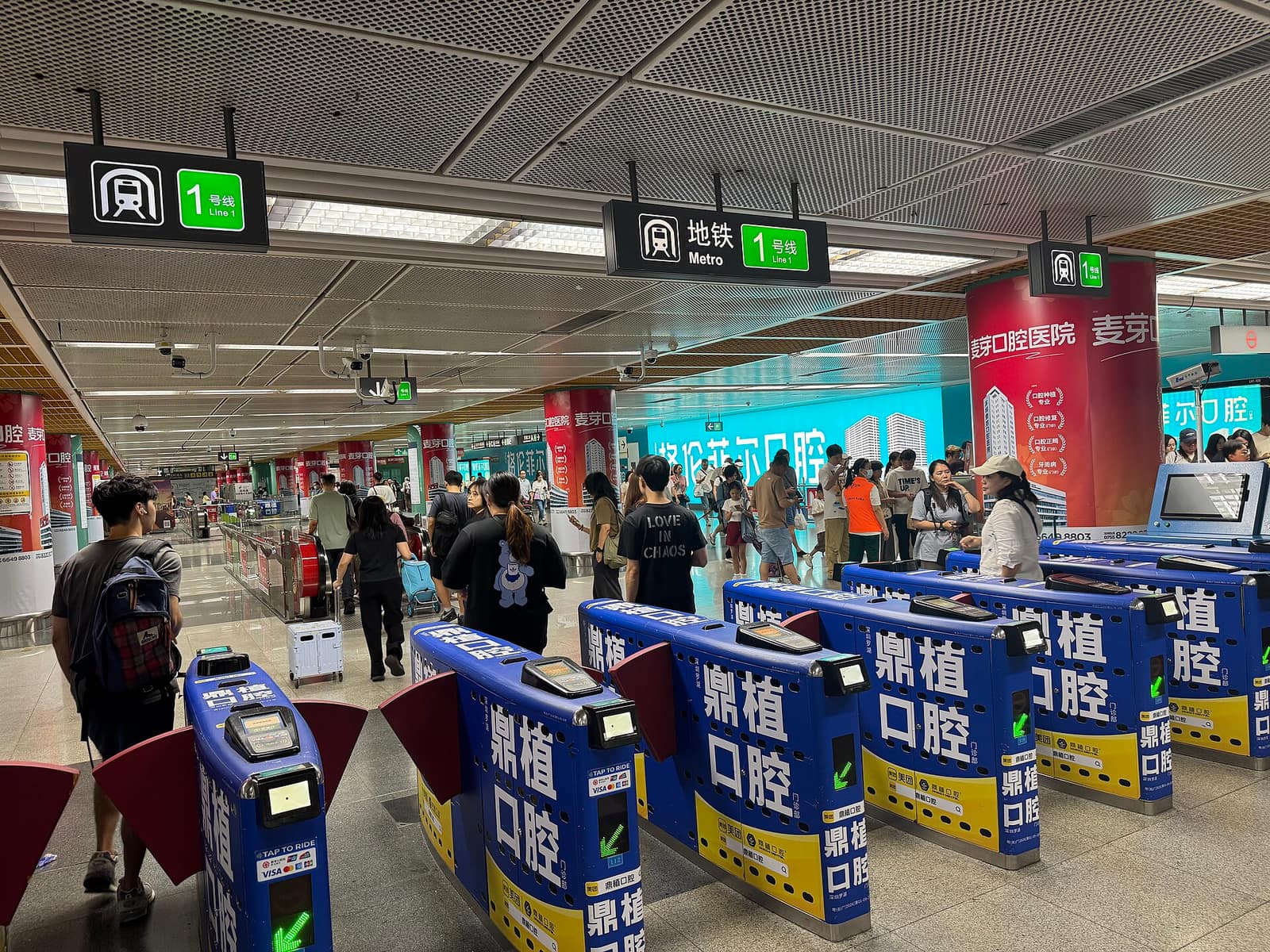
- Bank cards work at metro gates, and national guidance says hotels rated three stars and up and 4A/5A attractions should accept them. Elsewhere, ask. Carry some cash as a backup.
- On your home SIM (roaming), your usual apps generally keep working. On a Chinese SIM or local Wi-Fi, almost everything run by Google or Meta, and most foreign messaging apps, are blocked.
- Many phones can use a travel eSIM if they support eSIM and are unlocked. Local SIM cards from China Mobile or China Unicom need your passport.
Short answer: Before you fly, install Alipay and/or WeChat Pay, link your foreign card and make sure it works. Bring a contactless bank card for the metro and bigger shops and hotels, plus some cash as a backup. For data, either roam on your home SIM or buy an eSIM. Remember that many apps you use at home are blocked on Chinese networks.
This guide is part of our Shenzhen city guide.
How people pay in Shenzhen
Most everyday payments in Shenzhen, from cafés to snack stalls, are made by QR code. Either you scan the shop's code, or the cashier scans the code on your phone. Alipay and WeChat Pay are the two big apps for this, and both now work with foreign cards. Bank cards and cash are still accepted in many places, but a phone set up to pay makes life much easier.
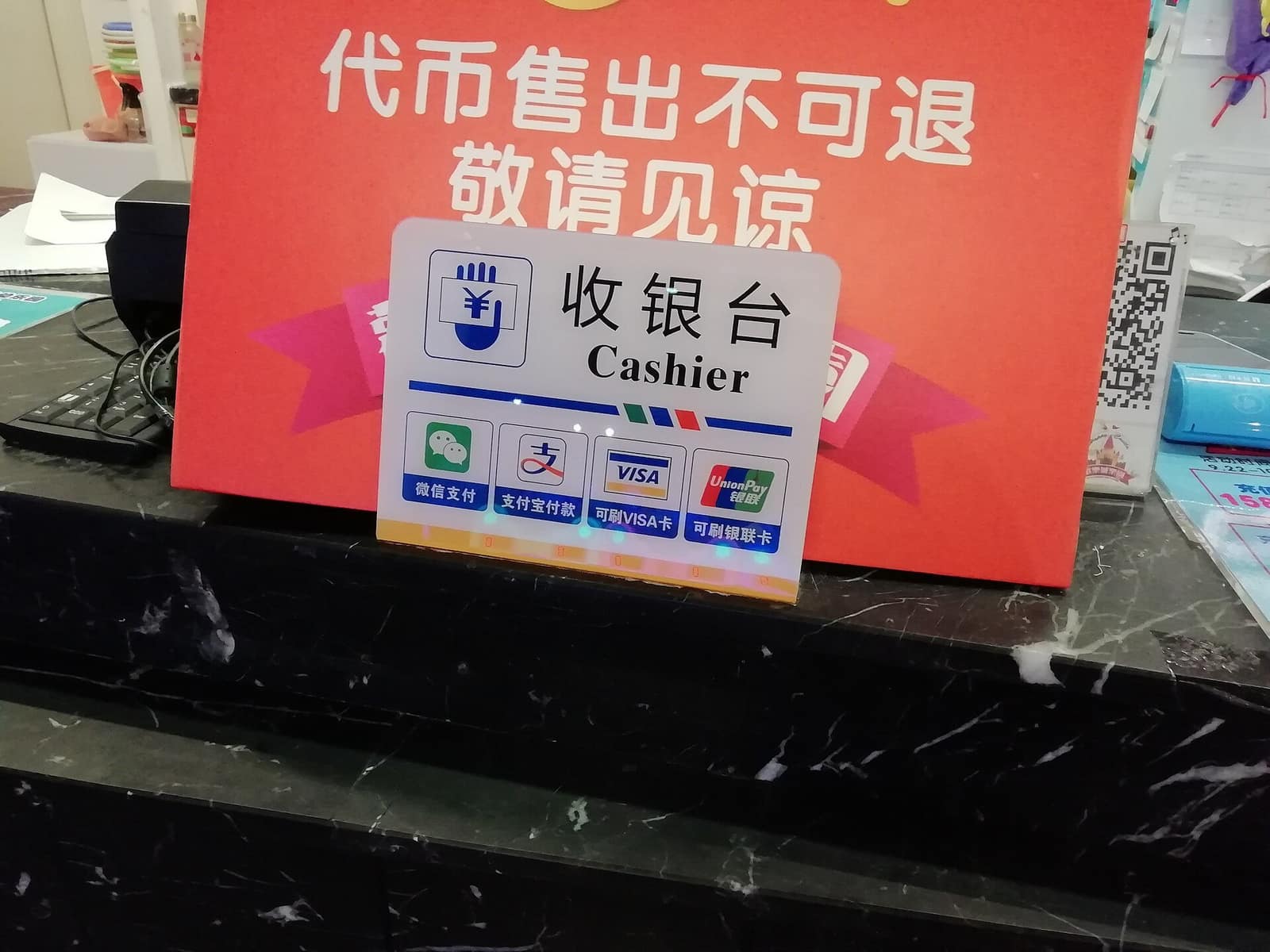 Photo: Shwangtianyuan / Wikimedia Commons, CC BY-SA 4.0

Alipay and WeChat Pay with a foreign card
Setting up
The National Immigration Administration's guide for foreigners says:
- Register in the Alipay or WeChat app with a foreign or Chinese phone number.
- Link a card. International cards with the Mastercard, Visa, JCB, Diners Club or Discover logos are accepted, as are Chinese UnionPay cards.
- Pay by scanning the merchant's QR code, or by showing your payment code.
The People's Bank of China's Shenzhen guide adds:
- WeChat Pay may ask you to verify your identity with a photo of your passport. You can start with card details only and use it for smaller amounts, then verify to raise the limit.
- Alipay with a foreign card is for purchases only. It can't be used for person-to-person transfers or red packets (gift money).
Do it at home. Linking the card needs your bank's approval, and some issuing banks reject the request. If yours does, contact your bank or try another card. Doing this before you travel, while you can still easily call your bank, saves stress.
Fees and limits
The National Immigration Administration's guide sets out the rules for payments with a linked foreign card:
- Fees: no extra service fee on payments up to a set amount, and a 3% service fee on payments above it.
- Limits: there's an annual limit and a per-transaction limit.
The figures can change, so check the current threshold and limits in the app. Your bank may also charge its own foreign transaction fees.
If your e-wallet is from Asia
The PBoC Shenzhen guide and the National Immigration Administration list Alipay+ partner wallets, including AlipayHK, Kakao Pay, Naver Pay, Toss Pay, Touch 'n Go eWallet, TrueMoney, Changi Pay, OCBC, MPay and HiPay. You can use these at merchants that accept Alipay, with no extra setup. WeChat Pay HK works at merchants that accept Weixin Pay. Your wallet may set its own limits, so check with its customer service.
Bank cards
- Metro. Since 10 September 2026, every Shenzhen Metro gate accepts contactless Visa, Mastercard, American Express, JCB and UnionPay cards. See our getting around Shenzhen guide.
- Hotels and attractions. The State Council's 2024 payment guide says hotels rated three stars and above and 4A/5A-rated attractions should accept foreign bank cards.
- Shops and restaurants. The PBoC Shenzhen guide says you can use foreign cards at POS terminals in places like airports, hotels, department stores and restaurants. If there's no card logo, ask the cashier.
- Before you go: tell your bank you'll be using your card in mainland China, and make sure you have enough credit or balance.
Cash
The yuan (RMB) is China's legal currency. According to the PBoC Shenzhen guide you can get it:
- from ATMs showing your card's logo (UnionPay cards work at all ATMs on the mainland),
- at bank branches, which also exchange foreign currency, and
- at currency exchange points, usually in airports, ports and busy areas.
Carry some cash for small vendors whose systems are down or don't accept foreign cards, but don't rely on it as your only way to pay.
Staying connected
You'll want mobile data for maps, translation, ride-hailing and paying. Here are your options, based on Lonely Planet's guide to getting connected in China.
Roaming on your home SIM
Lonely Planet notes that roaming on your home plan gives you uncensored access to the apps you normally use. The downside is cost. Check your carrier's roaming charges before you go.
eSIM
Check that your phone supports eSIM and isn't locked to your carrier before you buy one. If you bought an iPhone in mainland China, Apple's support pages say only some recent models support eSIM (iPhone Duo, iPhone 18 Pro, iPhone 18 Pro Max, iPhone 17e and iPhone Air, as of 9 September and 5 November 2026). Other iPhone models, including many bought outside the mainland, cannot install an eSIM from a mainland carrier, but a travel eSIM from a carrier outside the mainland is a different product — still install it before you enter the mainland. In mainland China, Hong Kong and Macau, some iPhone models use two physical nano-SIM cards instead. We don't have an equivalent public list for every Android model sold in these markets, so check the manufacturer.
For coverage, data allowances, when to install, and the plans we list, see our eSIM guide for Hong Kong, Macau and mainland China.
Local SIM card
Local SIMs from China Mobile and China Unicom need your passport to register. You'll get a Chinese number, which can make some local apps easier to use. Bear in mind the blocking described below.
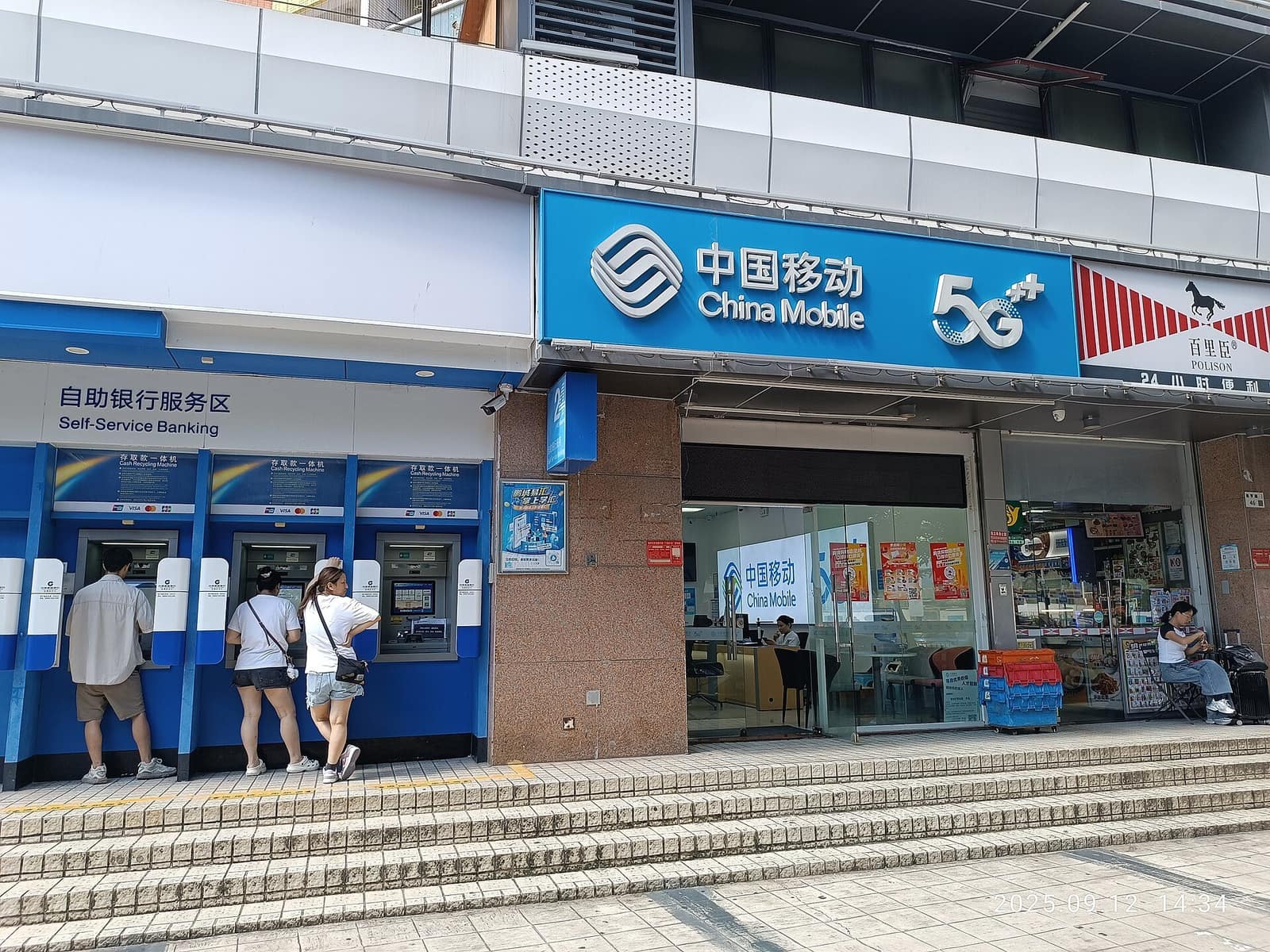 Photo: ELONGMAEN 338 ZEWOOMPP / Wikimedia Commons, CC0

Which apps work
On a Chinese SIM or local Wi-Fi, almost everything run by Google or Meta is blocked, including Google Maps, Gmail, Instagram and WhatsApp. So are X, Telegram, Signal and Messenger. Apple's iMessage, FaceTime and Maps work. Alipay and WeChat accept international phone numbers, so you can set them up before you arrive.
Practical tips:
- Download offline maps and a translation app with offline languages before you go.
- Tell family and colleagues how to reach you, for example by iMessage or WeChat.
- Save booking confirmations and your hotel address in Chinese as screenshots or offline files.
Checklist before you fly
- Install Alipay and/or WeChat, register, link a card and make sure it's accepted.
- Tell your bank you'll be in mainland China.
- Pack a contactless card for the metro and a backup card.
- Decide on roaming or an eSIM, and check your phone is unlocked and supports eSIM.
- Download offline maps and translation.
- Plan to get some cash on arrival, from an ATM or exchange counter.
More Shenzhen guides
Last verified: 3 November 2026. Fees, limits and app rules change, so check the official sources listed on this page before you go.
FAQ
Can I use Alipay or WeChat Pay with a foreign credit card?
Yes. The National Immigration Administration says foreigners can register with a foreign phone number and link international cards with the Mastercard, Visa, JCB, Diners Club or Discover logos. Some issuing banks reject the link; if that happens, contact your bank or try another card.
Are there fees for using Alipay or WeChat Pay with a foreign card?
According to the National Immigration Administration's guide, there's no extra service fee on payments up to a set amount, and a 3% service fee on payments above it. There are also annual and per-transaction limits. Check the current figures in the app.
Can I pay with cash in Shenzhen?
Yes. The yuan is legal tender, and you can get it from ATMs showing your card's logo, bank branches and currency exchange points at airports and ports. Many small vendors prefer QR payments, so carry cash as a backup rather than your main way to pay.
Will Google, WhatsApp and Instagram work in Shenzhen?
Not on a Chinese SIM or local Wi-Fi, where almost everything run by Google or Meta is blocked, WhatsApp and Instagram included. Lonely Planet notes that on your home SIM, roaming, they generally keep working. Apple's iMessage, FaceTime and Maps work in China.
Can I use an eSIM in China?
Usually, if your phone supports eSIM and is unlocked. Apple's support pages say eSIMs from carriers outside mainland China can't be installed while you are in the mainland, so install a travel eSIM before you enter. If you bought an iPhone in mainland China, only some recent models support eSIM (iPhone Duo, iPhone 18 Pro, iPhone 18 Pro Max, iPhone 17e and iPhone Air, as of 9 September and 5 November 2026). For coverage, when to install, and the plans we list, see our eSIM guide for Hong Kong, Macau and mainland China.
Sources
- National Immigration Administration – Guide for foreigners: mobile payment (via Beijing Municipal Commerce Bureau, 12 Nov 2024)
- People's Bank of China Shenzhen Branch – Payment service guide for overseas users in Shenzhen (via Nanshan District, 12 Apr 2024)
- The State Council (english.gov.cn) – Guide to payment services for foreigners in China (11 Apr 2024)
- Guangdong Provincial Government – WeChat Pay and Alipay for overseas users
- Shenzhen Metro Group – international bank cards accepted at all gates from 10 Sep 2026
- Lonely Planet – How to get connected in China
- Apple Support – Using eSIM with your iPhone in China mainland (published 9 September 2026)
- Apple Support – Learn which type of SIM your iPhone or iPad uses (published 5 November 2026)